
Disclosure: Some links on this page are affiliate links. We may earn a commission, at no extra cost to you. As an Amazon Associate I earn from qualifying purchases.
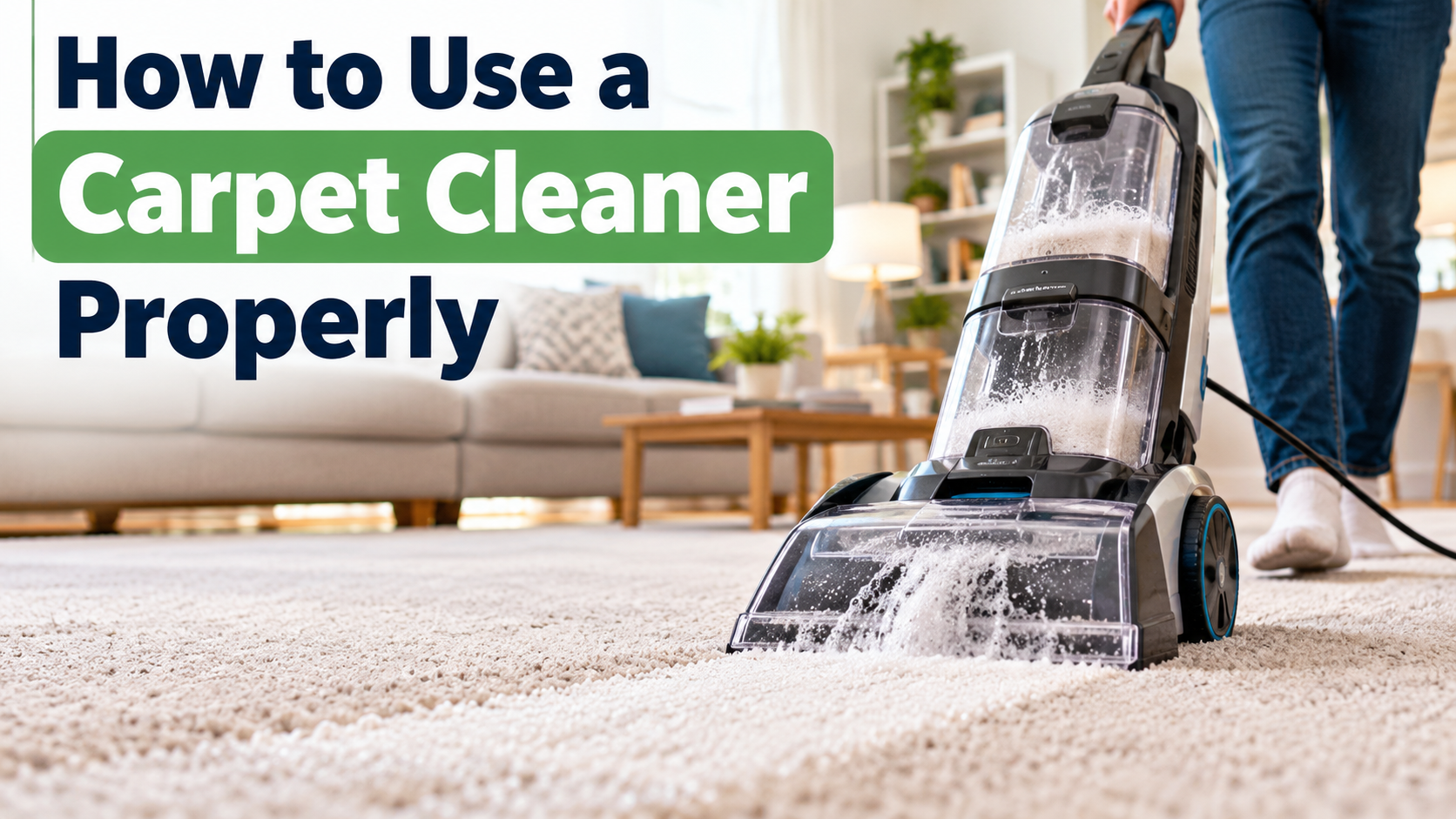
Using a carpet cleaner properly is less about making as many wet passes as possible and more about preparation, controlled cleaning, and removing as much moisture as you can afterward. A good process starts with dry vacuuming, uses the machine and cleaning formula exactly as directed, and finishes with extraction-only passes so the carpet is not left unnecessarily wet.
The exact controls vary by machine, so your model’s manual should always take priority. The steps below are a practical, manufacturer-neutral method that works as a framework for most upright carpet cleaners and extractors.
Before You Use a Carpet Cleaner
Clear the room as much as practical before you begin. Pick up small items, move lightweight furniture, and give yourself enough open floor space to make straight cleaning passes without constantly stopping and repositioning things.
Next, vacuum the carpet thoroughly. A carpet cleaner is designed to wash and extract embedded soil; it should not have to deal with a layer of loose hair, crumbs, grit, and surface debris first. Dry vacuuming also makes it easier for the cleaning solution and brush action to reach the carpet fibers.
Check the carpet care instructions and the cleaner’s manual before adding water or formula. If you are uncertain about colorfastness or compatibility, test a small inconspicuous area first. Use only a cleaning solution the machine manufacturer says is appropriate for that model.
How to Use a Carpet Cleaner Properly
1. Vacuum the Carpet First
Vacuum the entire area you plan to clean, including edges and high-traffic paths. Pay extra attention to pet hair, tracked-in dirt, and loose debris. If the carpet still has visible dry debris on the surface, keep vacuuming before switching to wet cleaning.
2. Pretreat Visible Stains if Needed
Some stains respond better when they are treated before the main cleaning pass. Use a pretreatment that is compatible with your carpet and machine, follow its label directions, and give it only the recommended dwell time. Do not assume every stain needs aggressive pretreatment.
If stains are a major reason you are cleaning, our guide to carpet cleaning solutions for machines can help you compare the types of formulas made for extractor use.
3. Fill the Machine Correctly
Fill the clean-water tank and add cleaning formula according to your machine’s instructions. Do not guess at dilution ratios or assume that more detergent will clean better. Too much formula can leave residue behind and may make rinsing more difficult.
If your cleaner has separate solution and water tanks, follow that system. If the machine uses a combined tank, measure the formula exactly as directed. Water temperature also depends on the model and formula, so use the temperature range specified by the manufacturer.
For a deeper comparison of machine-safe detergents, see our guide to the best carpet shampoo for carpet cleaners.
4. Start Away From the Exit
Plan your route before you begin. Starting at the far side of the room and working back toward the doorway helps keep you from walking across freshly cleaned carpet. Divide a large room into manageable sections so you can clean methodically instead of jumping from one area to another.
5. Make Controlled Wet Passes
Move the machine slowly enough for the brush and extraction system to work, but do not soak one area with repeated solution passes. Apply solution according to the operating method for your specific cleaner. Some machines dispense solution with a trigger while others automate part of the process.
Use straight, steady passes and avoid repeatedly stopping over the same spot while solution is flowing. The goal is to loosen and lift soil without saturating the carpet and pad underneath.
6. Follow With Extraction-Only Passes
After a wet pass, make one or more passes with no additional cleaning solution so the machine can pull moisture back out of the carpet. These extraction-only passes are one of the most useful steps for reducing drying time.
Watch the recovery action if your machine gives you a clear view of it. When substantially less water is being pulled into the dirty-water tank, move on rather than continuing to work the same strip.
7. Overlap Each Cleaning Path Slightly
Slightly overlap the edge of the previous path as you move across the room. This helps prevent narrow missed strips without requiring you to repeatedly re-clean the same area. Keep the overlap modest so you are not doubling the amount of solution applied to every section.
8. Empty and Refill the Tanks as Needed
Stop when the dirty-water tank reaches its fill limit or the clean-water tank needs more solution. Do not keep operating a machine past the point where its recovery tank or float system tells you to stop. Empty, rinse, refill, and resume according to the model’s instructions.
How to Avoid Over-Wetting the Carpet
Over-wetting happens when more liquid goes into the carpet than the machine can recover efficiently. That can lead to much longer drying times and can leave the carpet feeling damp deep below the surface.
- Use only the amount of solution the machine calls for.
- Keep wet passes controlled instead of repeatedly spraying the same area.
- Follow wet passes with extraction-only passes.
- Slow down enough for suction to work, but do not park the machine over one wet area.
- Stop and correct the process if the carpet is becoming progressively wetter without good recovery.
If your current machine struggles to recover water effectively, compare models in our guide to the best carpet cleaners.
How to Help Carpet Dry Faster
The best time to improve drying is while you are still cleaning. Extra extraction-only passes can remove moisture before it has time to settle deeper into the carpet. Once you finish the room, increase airflow where practical with ceiling fans, portable fans, air conditioning, or dehumidification.
Avoid normal foot traffic until the carpet is dry. Drying time is not universal: carpet thickness, humidity, room temperature, airflow, the amount of solution applied, and the effectiveness of the machine’s suction all make a difference.
What to Do After You Finish Cleaning
Do not put the machine away with dirty water or cleaning residue still inside it. Empty the recovery tank, rinse the tanks as directed, and remove visible hair or debris from accessible brush and nozzle areas when your machine’s instructions allow it.
Let removable tanks and washable components dry before long-term storage. Cleaning the machine immediately after use is much easier than dealing with dried residue, trapped hair, or odors the next time you need it.
Common Carpet Cleaner Mistakes
Skipping the Dry Vacuum
Loose debris is easier to remove while it is dry. Vacuuming first keeps hair and grit from becoming part of the wet-cleaning job.
Using Too Much Cleaning Solution
Extra detergent is not the same as extra cleaning power. Follow the formula and machine instructions rather than increasing the concentration on your own.
Moving Too Quickly
Rushing reduces the time the brushes and suction have to work. Use deliberate passes without crawling so slowly that you repeatedly soak the same area.
Skipping Extraction-Only Passes
Stopping immediately after the wet pass leaves more moisture in the carpet than necessary. Additional suction-only passes can make a noticeable difference in recovery.
Over-Wetting the Carpet
Repeatedly applying solution to one spot can lengthen drying time. If a stain needs additional attention, treat it deliberately rather than flooding the surrounding carpet.
Using an Incompatible Formula
Use only formulas that are appropriate for your machine and carpet. A cleaner designed for another type of appliance or surface may foam excessively, leave residue, or conflict with the manufacturer’s instructions.
Walking on the Carpet Before It Is Dry
Foot traffic can transfer soil back onto damp fibers. Give the carpet enough time and airflow to dry before returning the room to normal use.
Putting the Machine Away Dirty
Dirty recovery water, damp tanks, and trapped debris can create odors and make the next cleanup harder. Empty and rinse the machine promptly after use.
Frequently Asked Questions
Do you vacuum before using a carpet cleaner?
Yes. Vacuuming first removes loose dirt, grit, crumbs, and hair so the carpet cleaner can focus on washing and extracting embedded soil.
How many passes should you make with a carpet cleaner?
There is no single number that fits every machine or carpet. Use the wet-pass pattern specified by your cleaner, then make extraction-only passes until the machine is recovering much less water. Avoid repeatedly wetting an area just because a fixed pass count has not been reached.
Should you rinse carpet with plain water?
Only if your machine or cleaning-formula instructions recommend it. Some cleaning systems are designed around a specific rinse process while others are not. Follow the instructions for the products you are actually using.
How wet should carpet be after cleaning?
The carpet may feel damp after extraction cleaning, but it should not be left saturated. If it feels excessively wet, make additional suction-only passes and improve airflow in the room.
Can you use any cleaning solution in a carpet cleaner?
No. Use a formula that is compatible with the machine and appropriate for the carpet or surface being cleaned. Follow the cleaner manufacturer’s guidance rather than substituting a household detergent or an unapproved formula.
How long should carpet dry before walking on it?
Wait until the carpet is dry rather than relying on one universal time estimate. Humidity, airflow, carpet thickness, cleaning technique, and the amount of moisture recovered all affect drying.
The Bottom Line
Using a carpet cleaner properly comes down to a simple sequence: vacuum first, use the correct formula and machine settings, apply solution in controlled passes, extract as much moisture as possible, and give the carpet enough airflow and time to dry. The machine matters, but technique matters too. A careful wet pass followed by good extraction is usually more useful than repeatedly soaking the same area in an attempt to force a better result.