

Disclosure: Some links on this page are affiliate links. We may earn a commission, at no extra cost to you. As an Amazon Associate I earn from qualifying purchases.
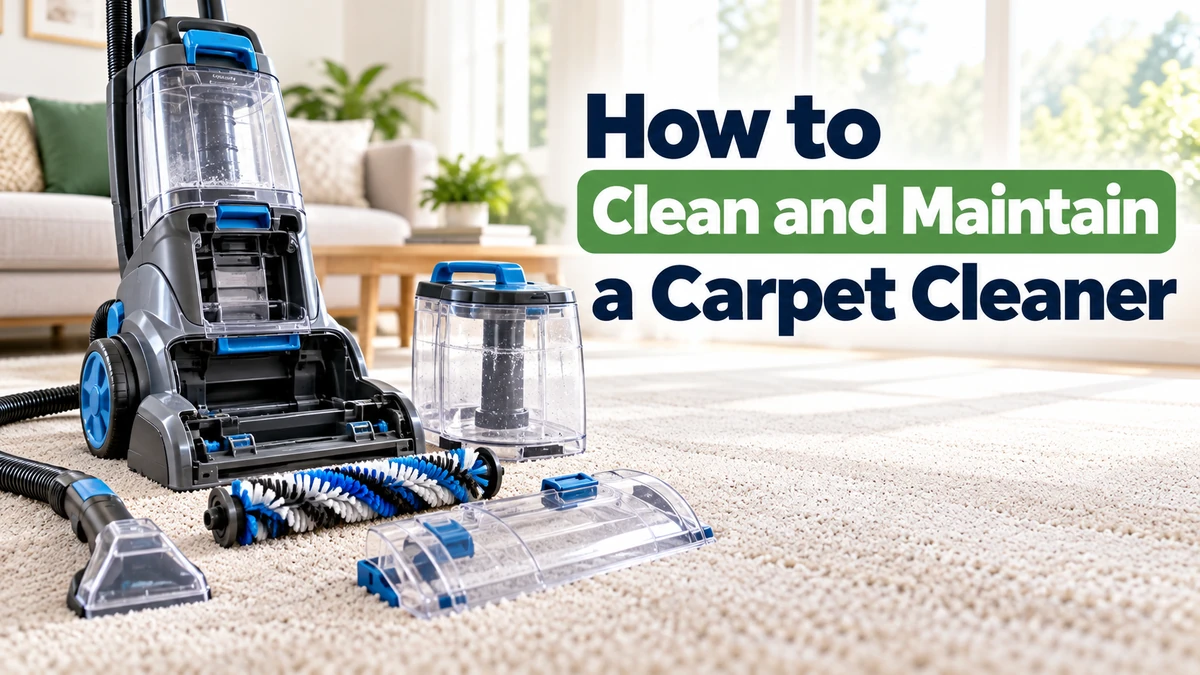
A carpet cleaner does not need complicated maintenance, but it does need regular cleanup after use. Dirty water, hair, carpet fibers, cleaning solution, and debris can remain in the tanks, brushes, nozzle, hoses, and recovery path. If that residue is left behind, it can contribute to odors, clogs, weaker spray, poor suction, or a machine that is unpleasant to use the next time.
The basic routine is simple: empty the machine, rinse the parts that are designed to be rinsed, remove debris from the brush and nozzle area, let washable components dry, and store the cleaner properly. Because designs vary, the owner’s manual for your exact model should always take priority over general maintenance advice.
Clean the Carpet Cleaner After Every Use
The best time to clean a carpet cleaner is immediately after you finish using it. Once dirty water and formula sit inside the machine, residue can begin drying onto tanks, hoses, screens, and other surfaces. Hair and carpet fibers are also easier to remove before they become tightly wrapped around a brush or packed into an opening.
A few minutes of cleanup at the end of the job is usually easier than troubleshooting a machine that has been stored dirty for weeks or months.
1. Turn the Machine Off and Unplug It
Before removing tanks, reaching near brushes, or cleaning the bottom of the machine, turn the carpet cleaner off and unplug it. Do not work around the brush, nozzle, or other moving parts while the machine is connected to power.
If you have just finished cleaning, move the machine to a hard surface or another area where a small amount of dripped water will not damage the floor.
2. Empty and Rinse the Dirty-Water Tank
Remove the recovery tank and dispose of the dirty water according to the manufacturer’s instructions. The tank can contain soil, hair, detergent residue, and whatever else was pulled from the carpet, so pour it out carefully.
Rinse the tank with clean water until loose debris and foam are gone. Pay attention to corners, channels, float assemblies, screens, and removable pieces that your manual identifies as washable.
3. Empty the Clean-Water or Formula Tank
Do not assume leftover cleaning solution should remain in the machine during storage. Empty the tank and rinse it if the manufacturer recommends doing so. Some carpet cleaners have separate water and formula tanks, while others combine the mixture in one tank.
Using the right formula also matters. Our guide to the best carpet cleaning solutions for machines covers options intended for extractor-style carpet cleaners. One currently available machine formula is Hoover Oxy Carpet Cleaner Solution on Amazon. Always confirm that a formula is appropriate for your specific machine before use.
4. Flush the Cleaning System Only if Your Model Calls for It
Some carpet cleaners have a plain-water flushing procedure that helps clear cleaning solution from internal lines after a job. Others use a different cleanup process.
Do not assume every machine should be flushed the same way. Follow the procedure in the owner’s manual for your exact model rather than improvising one.
5. Clean the Brush Area
Hair, lint, thread, and carpet fibers can collect around the brush or brushroll during cleaning. With the machine unplugged, inspect the brush area and remove anything wrapped around it or packed into the housing.
Some machines have user-removable brushes or covers, while others are intended to be cleaned while assembled. Do not force a component off if you are unsure whether it is designed to be removed.
6. Check the Nozzle and Suction Path
The front nozzle and recovery path can collect hair, lint, and dried residue. Inspect the opening after a major cleaning session and remove visible debris. If your model has a removable nozzle, rinse or clean it only as directed by the manufacturer.
A partially blocked nozzle or suction path can reduce water recovery and leave more moisture behind in the carpet. If your floor is staying wet longer than expected, see How Long Does Carpet Take to Dry After Cleaning? for the other factors that affect drying time.
7. Clean Filters, Screens, and Debris Traps
Many carpet cleaners include a filter, screen, float, or debris trap somewhere in the recovery system. These parts help keep larger debris from moving farther into the machine.
Check the manual before removing or rinsing anything. If a filter is washable, let it dry as directed before reinstalling it. If it is not washable, follow the manufacturer’s cleaning or replacement instructions.
8. Rinse Hoses and Hand Tools When Required
If you used a hose attachment for stairs, upholstery, furniture, or spot cleaning, do not forget it when the main machine is cleaned. Dirty water and formula residue can remain inside the hose or tool head.
Some manufacturers provide a hose-rinsing procedure. Rinse removable tool heads with clean water only when the instructions permit it, clear hair or debris from the suction opening, and allow the pieces to dry before storage.
9. Wipe Down the Bottom of the Machine
The underside of a carpet cleaner travels directly over damp carpet, so it can collect dirt, hair, and solution residue. With the machine unplugged, wipe the wheels, base, and accessible areas around the cleaning head.
A damp cloth is usually enough for exterior surfaces unless your manufacturer’s instructions say otherwise. Avoid spraying water into motors, switches, electrical connections, or areas that are not designed to get wet.
10. Let Everything Dry Before Storage
After rinsing tanks and washable parts, give them time to drain and dry. Leaving lids or removable parts open while drying can help trapped moisture escape.
Once the components are dry, reinstall them so the cleaner is ready for its next use.
How Often Should You Deep-Clean the Machine Itself?
A quick cleanup should happen after every use. A more detailed inspection can be done periodically, especially if you use the cleaner often.
- Brushes and brushrolls
- Nozzle openings
- Hose connections
- Filters and screens
- Tank seals and gaskets
- Wheels
- Power cord
- Spray tips
- Tool attachments
The goal is not to disassemble the entire machine after every job. It is to catch residue, wear, or blockages before they become performance problems.
What About the Spray Nozzles?
If the machine starts spraying unevenly or one side stops spraying, dried formula or debris may be affecting the spray system. Before trying to clear a spray tip manually, check the owner’s manual.
Do not push needles, wire, or other objects into spray components unless the manufacturer specifically instructs you to do so. An aggressive attempt to clear a clog can damage the nozzle or surrounding hardware.
How to Prevent Bad Smells Inside a Carpet Cleaner
Odor usually starts with moisture and residue left somewhere inside the machine. The best prevention is simple: empty the dirty-water tank promptly, rinse it, clear debris from the brush and nozzle area, clean the hose when required, and let washable components dry before storage.
If a carpet cleaner already smells bad, inspect the recovery tank, lid, filters, hose, tool head, and nozzle for trapped debris. Fragrance does not replace removing the source of the odor.
Can You Use Vinegar or Bleach to Clean a Carpet Cleaner?
Do not automatically pour vinegar, bleach, disinfectant, or another household chemical through a carpet cleaner. Internal seals, pumps, tanks, and hoses vary by machine, and a chemical that seems harmless elsewhere may damage components or react with cleaning-product residue.
For internal maintenance, use the manufacturer’s approved procedure. If the manual calls for plain water, use plain water.
How Should You Store a Carpet Cleaner?
Store the machine clean, empty, and dry in an indoor location where it will not be exposed to freezing temperatures, heavy moisture, or extreme heat. Wrap the power cord and hose without sharp bends, and keep attachments where they will not be crushed or lost.
If you are also deciding how frequently the carpet itself needs a full cleaning, see How Often Should You Deep Clean Your Carpet?.
Common Carpet Cleaner Maintenance Mistakes
Putting the Machine Away Dirty
This is one of the easiest mistakes to avoid. The carpet may be clean, but the machine is still holding the dirt and residue it just removed. Clean it before storage.
Leaving Water in the Tanks
Standing water can create odors and residue and makes the machine unpleasant to open the next time you need it. Empty and rinse the tanks when the job is finished.
Ignoring Hair Around the Brush
Long hair, pet hair, string, and fibers can accumulate around the brush area. Removing them routinely is easier than waiting for heavy buildup.
Storing the Machine While Wet
Give washable components time to dry. Closing damp tanks and hoses traps the moisture you are trying to remove.
Using the Wrong Cleaning Chemical
Use formulas and maintenance procedures approved for your machine. Do not assume a homemade cleaner or strong household chemical is safe simply because it works somewhere else in the home.
When a Carpet Cleaner Needs More Than Routine Maintenance
Cleaning the machine will not fix every problem. Stop and investigate if you notice a damaged power cord, significant leaking, a burning smell, unusual electrical behavior, a pump that will not spray after normal troubleshooting, a motor that sounds significantly different, broken tanks or seals, or suction that does not return after obvious blockages are cleared.
Consult the owner’s manual and manufacturer support before opening parts that are not intended for routine user service. If the cleaner is still under warranty, unauthorized repairs or disassembly may affect coverage.
Maintenance Starts With Using the Machine Correctly
Good maintenance begins during the cleaning job. Do not overload the machine with formula, repeatedly soak the same area, or keep operating when a tank is full or the recovery path is clogged.
If you want the complete operating sequence, read How to Use a Carpet Cleaner Properly before your next cleaning session.
Frequently Asked Questions
Should I clean my carpet cleaner after every use?
Yes. At minimum, empty and rinse the tanks and remove accessible debris from the brush, nozzle, and tool areas according to the manufacturer’s instructions. More detailed maintenance can be done periodically.
Can I leave carpet-cleaning solution in the machine?
For storage, it is generally better to empty the machine unless the manufacturer specifically says otherwise. Follow the instructions for your exact model.
Should I rinse the carpet cleaner with plain water?
Some models specifically recommend a plain-water flushing procedure after use, while others use a different cleanup process. Follow the procedure for your exact machine rather than assuming every carpet cleaner should be flushed the same way.
Why has my carpet cleaner lost suction?
A full or incorrectly seated recovery tank, a clogged nozzle or suction path, a dirty filter, or a loose connection can reduce suction. Start with the troubleshooting steps in the owner’s manual before assuming the motor has failed.
Why isn’t my carpet cleaner spraying?
An empty or improperly seated clean-water tank, a lost pump prime, a blocked spray path, or another model-specific issue may be responsible. Begin with the manufacturer’s troubleshooting steps instead of disassembling the pump.
The Bottom Line
A carpet cleaner is easier to keep working well when cleanup becomes part of every cleaning session. Empty and rinse the tanks, remove hair and debris, clean the nozzle and brush area, handle hoses and filters as your model requires, and let washable components dry before storage.
The most important rule is to follow the manual for your exact machine. Carpet cleaners differ in tank design, filters, brushes, hoses, spray systems, and flushing procedures, so a maintenance step that is correct for one model may be unnecessary or inappropriate for another.