

Disclosure: Some links on this page are affiliate links. We may earn a commission, at no extra cost to you. As an Amazon Associate I earn from qualifying purchases.
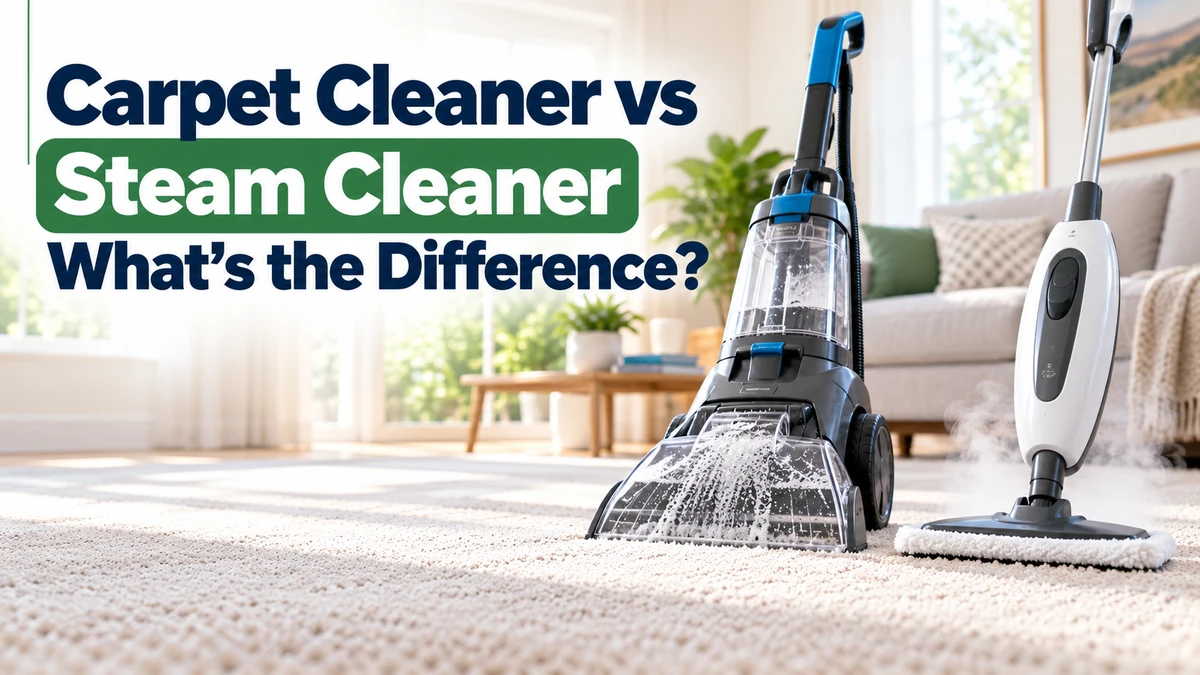
A carpet cleaner and a steam cleaner can both involve water and heat, but they are not the same kind of machine. The confusion comes from the way the term “steam cleaning” is often used for carpet deep cleaning. In the carpet industry, hot-water extraction is frequently called steam cleaning even though the machine is mainly spraying cleaning solution into the carpet and extracting the dirty water back out. A true vapor steam cleaner works differently: it heats water to produce steam and usually does not extract dirty water from the carpet.
For most whole-room carpet cleaning, a carpet extractor or upright carpet cleaner is the more appropriate tool. A vapor steam cleaner may be useful for certain manufacturer-approved carpet-refreshing tasks, but it should not automatically be treated as a substitute for an extraction machine.
The Short Answer
A carpet cleaner is designed to wash carpet fibers with water and cleaning solution and then recover much of that moisture, along with loosened soil, into a dirty-water tank. A true steam cleaner produces hot vapor and relies on heat and moisture at the surface; most household steam cleaners do not have the same wash-and-extract process.
If your goal is removing embedded soil, spills, pet messes, and cleaning-solution residue from a carpeted room, a carpet cleaner is usually the better fit. If your goal is lightly refreshing a carpet with a steam-cleaner attachment that the manufacturer specifically approves for carpet, a vapor steam cleaner may have a limited role.
Why the Term “Steam Cleaning” Is Confusing
You will often see professional carpet cleaning described as “steam cleaning.” In many cases, that service is actually hot-water extraction. The Carpet and Rug Institute uses hot-water extraction and steam cleaning as commonly used names for deep carpet cleaning.
That means two very different machines may be called a steam cleaner:
- A carpet extractor or deep cleaner that sprays heated or warm water and cleaning solution into the carpet and immediately recovers the dirty liquid with suction.
- A vapor steam cleaner that heats water to create steam and applies that vapor through a floor head or accessory.
When comparing machines, pay more attention to what the machine actually does than to the name printed on the box.
How a Carpet Cleaner Works
A household carpet cleaner typically has a clean-water or solution tank, a spray system, brushes or agitation, a suction path, and a recovery tank. During a cleaning pass, the machine applies water and formula to the carpet. Brushes help loosen soil, and suction pulls the dirty water back into the machine.
The suction stage is what turns washing into extraction: loosened soil and moisture are pulled into the recovery tank instead of being left in the carpet.
For the best results, use the machine according to its instructions, avoid over-wetting, and make extra dry passes when the manufacturer recommends them. If you need the full operating sequence, see How to Use a Carpet Cleaner Properly.
How a True Steam Cleaner Works
A true steam cleaner heats water and delivers steam through a nozzle or floor tool. These machines are commonly designed for sealed hard floors and other heat-tolerant surfaces. Some manufacturers offer carpet gliders or similar attachments that allow certain steam cleaners to move over carpet for refreshing.
A carpet glider may expose the pile to steam, but it does not provide the rinse-and-recovery cycle of an extractor.
Manufacturer guidance matters here. Some steam-cleaner manuals warn that heat and moisture can damage certain carpets and instruct users to test an inconspicuous area first, use a low steam setting, avoid holding steam in one place, and follow the carpet manufacturer’s care instructions.
Carpet Cleaner vs Steam Cleaner: Side-by-Side
| Feature | Carpet Cleaner / Extractor | True Vapor Steam Cleaner |
|---|---|---|
| Main purpose | Deep-clean carpet by washing and extracting soil and moisture | Use steam for surface cleaning or manufacturer-approved refreshing |
| Uses cleaning formula | Usually yes | Usually no; many use water only |
| Brush agitation | Common | Usually not the main cleaning action |
| Dirty-water recovery | Yes | Typically no |
| Best carpet role | Whole-room deep cleaning, spills, traffic soil, pet messes | Limited carpet refreshing when specifically approved |
| Moisture removal | Built-in suction recovers water | No comparable extraction on most vapor steam cleaners |
| Risk if misused | Over-wetting, residue, slow drying | Heat/moisture damage if carpet is not suitable or steam is overapplied |
Which One Cleans Carpet More Deeply?
For normal residential deep cleaning, a carpet cleaner or extractor has the advantage because its wash-and-recovery cycle loosens soil with water and cleaning solution, then removes much of that dirty liquid with suction. A true vapor steam cleaner does not provide the same extraction step, so it is better viewed as a limited carpet-refreshing tool when both the machine manufacturer and the carpet-care instructions allow it.
Does Hot-Water Extraction Actually Use Steam?
Not necessarily. Professional hot-water extraction equipment can use very hot water, but the visible vapor people associate with the term “steam cleaning” is not what performs the extraction. Water, cleaning chemistry, agitation where applicable, and suction do the main work.
So when shopping, judge the method rather than the label. A carpet cleaner can use warm or heated water and extraction without being a vapor steam machine.
When a Carpet Cleaner Makes More Sense
- You are deep-cleaning an entire carpeted room.
- The carpet has visible traffic soil or embedded grime.
- You need to remove dirty water rather than just add heat or moisture.
- You are cleaning after spills, pet accidents, or repeated spot treatments.
- You want a machine specifically designed around carpet-safe washing and recovery.
For a current example of an extraction-style carpet cleaner, see the Tineco Carpet One Cruiser on Amazon.
If your carpet is due for a full cleaning, our guide on How Often Should You Deep Clean Your Carpet? explains how household traffic, pets, children, and other conditions affect the schedule.
When a Steam Cleaner Might Make Sense
A true steam cleaner may make sense when the manufacturer specifically lists carpet as an approved application, usually with a carpet glider or designated attachment. In that situation, think of steam as a carpet-refreshing tool rather than automatically assuming it provides the same deep soil removal as extraction.
This can be useful when you already own a compatible steam cleaner and want to freshen the pile between deeper cleanings. Follow the steam-cleaner instructions and the carpet manufacturer’s care guidance, especially for temperature, moisture, pile type, and dwell time.
Can Steam Damage Carpet?
It can if the carpet or cleaning method is not suitable. Heat, moisture, dyes, backing materials, adhesives, pile construction, and carpet type all matter. A steam-cleaner manufacturer may approve its carpet attachment for some carpets while warning against prolonged exposure or certain pile types.
Do not assume that because steam is chemical-free it is automatically safe for every carpet. Test an inconspicuous area, use the lowest effective setting when directed, keep the tool moving, and stop if you see changes in texture, color, backing, or adhesion.
What About Carpet Cleaners That Include Steam?
Some newer carpet cleaners combine extraction with a steam feature. These hybrid machines are different from a basic vapor steam mop or canister steam cleaner.
One current example is the BISSELL Revolution HydroSteam 4123 on Amazon, which combines extraction with a steam feature.
For example, certain carpet cleaners use steam along with water, cleaning formula, brushes, and extraction. In that design, steam is one part of a carpet-cleaning system rather than the entire cleaning method.
If you are comparing one of these machines with a standard extractor, look at the complete cleaning process: how it applies water, whether it uses formula, how it agitates the carpet, how much moisture it recovers, and what the manufacturer says the steam mode is intended to do.
Which One Leaves Carpet Wetter?
The answer depends on the machine and how it is used. A carpet cleaner deliberately wets the carpet but also has suction designed to recover water. A vapor steam cleaner may apply less liquid overall, but it generally does not extract that moisture afterward.
With an extractor, slow drying is often caused by too much solution, too many wet passes, weak recovery, clogged suction paths, or poor airflow in the room. For ways to reduce drying time, see How Long Does Carpet Take to Dry After Cleaning?.
Do You Need Cleaning Solution With Both?
Carpet extractors commonly use a manufacturer-approved carpet-cleaning formula. The formula helps loosen and suspend soil so the machine can recover it.
Many true steam cleaners are designed to use water without detergent in the boiler or tank. Adding cleaning chemicals to a steam cleaner that is not designed for them can damage the machine or create a safety problem. Never add formula, vinegar, fragrance, disinfectant, or another chemical unless the manufacturer specifically allows it.
Which Is Better for Pet Messes and Stains?
A carpet cleaner is generally the more practical choice for a larger pet mess or stained area because it can apply cleaning solution and recover contaminated liquid. Pretreatment may also be appropriate before extraction, depending on the stain and the carpet-care instructions.
Steam alone is not a universal stain treatment. Heat can affect some stains, fibers, or treatments, so follow the carpet’s care guidance.
Which Is Better for Routine Carpet Care?
Neither machine replaces vacuuming. Dry soil should be removed with a vacuum before wet cleaning because adding water to loose grit and debris makes the job harder.
A sensible carpet-care routine is:
- Vacuum regularly.
- Treat spills promptly with an appropriate spot-cleaning method.
- Use a carpet cleaner or professional extraction service when the carpet needs deep cleaning.
- Use a steam-cleaner carpet attachment only when both the steam-cleaner manufacturer and the carpet-care guidance support it.
Frequently Asked Questions
Is a carpet cleaner the same as a steam cleaner?
No. A carpet cleaner or extractor applies water and usually cleaning formula, agitates the carpet, and recovers dirty water with suction. A true steam cleaner produces hot vapor and generally does not perform the same extraction process.
Why do professionals call carpet cleaning “steam cleaning”?
The term is commonly used for hot-water extraction. In that context, steam cleaning does not necessarily mean a vapor steam machine is being used.
Can I use a steam mop on carpet?
Only if the manufacturer specifically approves carpet use and provides the required attachment or procedure. Many steam mops are primarily designed for sealed hard floors.
Can a steam cleaner replace a carpet extractor?
Usually not. A steam cleaner may refresh some approved carpets, while an extractor is the tool designed for whole-room deep cleaning.
Is steam better because it uses fewer chemicals?
Not automatically. The best method depends on the carpet, the soil, the machine, and the manufacturer’s care instructions. Chemical-free steam can be useful for some approved applications, but extraction is generally better suited to removing soil from carpet fibers.
Should I rent or buy a carpet cleaner instead of using a steam cleaner?
If your goal is periodic whole-room deep cleaning, an extractor or carpet cleaner is the more direct tool. Whether renting or buying makes more sense depends on how often you clean, your storage space, and the size of your home.
The Bottom Line
The practical difference is simple: carpet cleaners are built for deep washing and water recovery; vapor steam cleaners are primarily surface-refreshing tools when approved for carpet.
For most whole-room carpet deep cleaning, use a carpet cleaner or professional hot-water extraction service. Use a vapor steam cleaner on carpet only when the machine manufacturer and carpet-care instructions specifically allow it, and think of that use as refreshing rather than automatically equivalent to deep extraction.
Once you finish an extraction job, proper cleanup matters too. See How to Clean and Maintain a Carpet Cleaner for the after-use routine.